| Spotlight |
| Faculty Tina Gianquitto Research: Science, Environment and Culture |
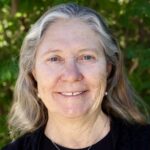
Tina Gianquitto recalls as a small girl walking hand in hand with her grandfather in his vast garden. “We’d roam around and he’d point things out and teach me about nature,” said Gianquitto, associate professor of literature in the Division of Liberal Arts and International Studies. For Gianquitto, these early memories mark the beginning of her deep-seated interest in the natural world. “I’ve always loved nature and being outside; the freedom of it all fulfills me somehow,” said Gianquitto, who spent eight days last summer kayaking with her husband off the coast of New England.In addition to turning to nature for recreation, Gianquitto has made it the center of her academic life. Back in the mid-1990s while studying for her PhD in American literature at Columbia University, she discovered that very little research had been done on women’s interaction with nature in the 19th century. She’d been contemplating a number of topics for her thesis, but this one ignited her interest like no other, and she took it up with zeal. Botany, it turned out, was one way women found to connect to the natural world, and her dissertation focused on the work of four female botanists whose scientific pursuits were far outside the norm in 19th century America. With doctorate in hand, her subsequent research picked up some loose ends that interested her. Of the four women she’d studied, Mary Treat was the most serious and successful scientist, and she’d enjoyed a regular correspondence with Charles Darwin. Gianquitto was fascinated by these letters, in particular by Darwin’s responses. And as she read more of Darwin’s correspondences with women, she began to find some common threads. While American society was slow to take Darwin’s theory of evolution seriously, his ideas found support among several groups of women activists, particularly those fighting for animal rights and women’s suffrage. Gianquitto explains that the theory of evolution undermined prevailing ideas about women’s place in society and gave women an opportunity to redefine their roles. Having spent much of last summer in England reading through boxes of handwritten correspondences from and to Darwin, Gianquitto is now working on a book tentatively titled, Dear Mr. Darwin: Women, Evolution, and Radical Social Reform, in which she hopes to explore the subject further. Although her studies have focused primarily on women, Gianquitto says she’s really trying to address some of the more fundamental questions that cut across gender lines. Origin of Species changed key tenets of Western society, she explains, and it wrought a profound change in how we view ourselves. Furthermore, she believes that science continues to revise our understanding of our place in, and impact on, the earth. She’s interested in how these changes in perception change who we are and how we live. “[I’m asking] what our relationship is to the natural world and how these sciences, ones that tell us about our place in nature, influence how we see our place in the social or cultural world,” says Gianquitto. As a literary scholar who had made science and society the focus of her work, Gianquitto was a natural pick for the school, but why did Gianquitto choose Mines? “Mines appealed to me [because many of my students] are going to be dealing directly with the environment, so I thought that if I could contribute at all to their understanding of that world in which they’ll be operating, then that’s what I should be doing,” she said. “It was a golden opportunity to work with this group of students. They are great. I really enjoy teaching at Mines.” Gianquitto says that in her literature classes her goal is to help students “develop confidence in their ability to examine the world and clearly communicate” what they learn. “I want them to look at why we use our environment in the ways we do and the consequences of that use,” she said. Stacie LaRocque, a business and economics major who took several of Gianquitto’s classes before graduating last May, said she liked Gianquitto’s open-ended teaching style. “She’d throw out all these ideas and lots of questions and then let you go with them,” LaRocque said. “She let you think through things on your own. She made me a better student and person." Students Wentz Wensel Year: Graduate Student Major: Geotechnical Engineering Rachel Des Cognets Year: Graduated Dec. ’08 Major: Engineering, Civil Specialty Wentz Wensel and Rachel Des Cognets traveled to Washington, D.C. last summer to serve as interns for the U.S. House Committee on Natural Resources for the Republican Desk. Both enrolled in the McBride Honors Program, they were considering careers in public policy and wanted to take a closer look. What they saw helped them make up their minds, but their decisions were polar opposites.As part of the U.S. Public Policy class, McBride students learn how some legislation governing technical issues has been written into law without sufficient involvement from engineers. Such laws can impose costly and ineffective requirements on an entire industry despite the availability of more effective alternatives. Such incidences are less likely to take place if more engineers and scientists are involved in the formation of public policy and legislation, and this was the role Rachel and Wentz went to Washington to consider. For Rachel, it began when she read Dance of Legislation by Eric Redman. The book goes behind the scenes on Capitol Hill, detailing the passage of a bill through the legislative process, complete with complex plots, sub-plots and political maneuvers. “It just killed me,” said Rachel. “I knew I had to go; I had to do this. It sounded exciting and so useful for an engineer to be in that environment.” Rachel was exhilarated by her time in D.C. “Every day was so exciting ... I still really want to do this,” she said. “I’ll graduate in December with an undergraduate degree in civil engineering and I’ve applied to the University of Denver’s international studies program. I’m hoping to work some day in international policy with water resources.” Wentz came to some quite different conclusions. “I thought it was something that I really wanted to do,” he explained. “It was an amazing experience, but I learned that I don’t really want to work in Washington. Maybe sometime later in life, if I see something really wrong that I think I can fix, I’ll maybe get into politics, but it will never be a career for me.” Explaining why, he reflects, “You always have to be on your toes; always have to have a smile on your face, no matter how you feel; always have to be engaging and make a good impression. You never know who is around you.” Although the political infighting was wearing at times, it was also stimulating. “It was really fun being on the minority side because you just had to fight harder,” said Rachel. She described how Democratic and Republican staffers would be gathered in a back room watching a hearing via closed-circuit TVs, cheering and giving each other high-fives when their respective bosses successfully “slammed” another senator. This, even though “the other senator’s staffers were just four seats over,” said Wentz. Though the rivalry was sometimes harsh, Wentz and Rachel frequently experienced a sense of collegiality among staffers, regardless of political affiliation. “It’s quite hard to get a straight answer out of a representative or a senator,” said Wentz, “but the staff will give you surprisingly direct answers. They’ll say, ‘this is do-not-repeat, but … ’” For the six weeks they spent in Washington, Wentz and Rachel were insiders to a world viewed by most from a distance. Becoming a part of that world was exciting in and of itself. They laughed about discovering some of the dos and don’ts—how none of the interns wear their intern badges issued for the Capitol Building “because it makes interns look too much like interns.” And they describe rushing presentations through the Capitol to the Senate Floor using a shortcut through a labyrinth of dimly lit passageways. It was a formative time that they will always remember and they are both very grateful to the McBride Honors Program for the experience; they are also grateful for the contribution it has made to their overall undergraduate experience. “I have learned way more than I would have in any other program, probably at any other school, because it’s based off an engineering background,” says Wentz, who has completed his bachelor’s degree and is now a graduate student studying geotechnical engineering. “You get to see the whole picture. You can be a great engineer with just the math and science, but you are much more effective if you understand the wider landscape, like how many people are influenced by what you do, who reads that report you wrote, and how it will be used to make decisions. The politics are important.” Since the McBride Honors Program has given her a clear direction for her career that she’s excited about pursuing, it’s not surprising that Rachel is equally upbeat. And she puts an interesting twist on their respective decisions: “For me, instead of using public policy for engineering, I’m going to use engineering to be a better policy maker.” |

Tina Gianquitto recalls as a small girl walking hand in hand with her grandfather in his vast garden. “We’d roam around and he’d point things out and teach me about nature,” said Gianquitto, associate professor of literature in the Division of Liberal Arts and International Studies. For Gianquitto, these early memories mark the beginning of her deep-seated interest in the natural world. “I’ve always loved nature and being outside; the freedom of it all fulfills me somehow,” said Gianquitto, who spent eight days last summer kayaking with her husband off the coast of New England.
Wentz Wensel and Rachel Des Cognets traveled to Washington, D.C. last summer to serve as interns for the U.S. House Committee on Natural Resources for the Republican Desk. Both enrolled in the McBride Honors Program, they were considering careers in public policy and wanted to take a closer look. What they saw helped them make up their minds, but their decisions were polar opposites.