|
Commencement 2009
May 8 marked Mines' 135th Commencement, at which more than 650 members of the Class of 2009 received their degrees. (more...)
New Summer Renewable Energy Research Program
Twenty undergraduates from Mines and other universities are spending their summer in a new 10-week Research Experience for Undergraduates program. (more...)
New Provost and Executive Vice President Appointed
Steven P. Castillo began his appointment July 1. He came to Mines after a long career at New Mexico State University. (more...)
VP of Student Life and Dean of Students Harold Cheuvront Retires
After three decades of service, Harold Cheuvront retired this spring. He began his tenure as registrar in 1981, becoming vice president of student life and dean of students in 1989. (more...)
Mines Teaches Courses in Libya
Mines ran a weeklong petroleum engineering course in Libya this June, becoming the first American university to do so in more than three decades. (more...)
In Brief...
Announcements and additional news items. (more...)
Commencement 2009
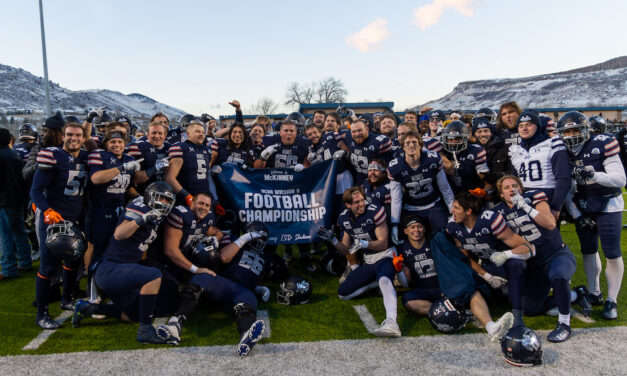
Excited students, proud families and friends gathered May 8 on Kafadar Commons for Mines’ 135th Commencement. President Bill Scoggins welcomed visitors to the ceremony at which over 650 members of the Class of 2009 received their degrees.
Donald Paul, executive director of the University of Southern California’s Energy Institute and the William M. Keck Chair in Energy Resources at USC, opened with an encouraging address about the next phase of life: “… your years at Mines have provisioned you well for this journey … As with all Mines graduates who have come before, your class has the opportunity—and I would claim the obligation—to build sustainable lives and careers … and to positively and constructively advance our societies.”
Paul, an MIT alumnus, retired in 2008 after a distinguished career at Chevron. During Commencement, he was awarded an Honorary Doctorate of Engineering. In addition, the school awarded four Distinguished Achievement Medals:
Bruce M. Clemens ’78: professor of photon sciences, Stanford University Synchrotron Radiation Lab
M. Stephen Enders ’76: director, Renaissance Resource Partners
Mari Angeles Major-Sosias ’85, MS ’92: strategy director—North American division, AREVA
Tom Vander Ark ’81: managing partner, Revolution Learning; partner, Vander Ark/Ratcliff
Graduating senior Zachary Aman remarked on how Mines has prepared him and his classmates to make a difference: “In choosing to attend this institution, we selected an arduous course, and are today the better for it … We have the ability to truly comprehend the complexity of the world around us and, as Mines engineers, we have the potential to change it.”
Although this year’s graduates are entering a weak job market, they are still in high demand. Placement rates are on par with the school’s 20-year average and 13 percent higher than the reported national average for engineers. More than 130 recruiters are registered for Fall Career Day, and 69 companies are already scheduled for fall campus interviews.
Back to top.
New Summer Program Engages Students in Renewable Energy Research

Left to right: David Banville (Canada), Jonathan Guerrette (Colby College), Andrea Yocom (CSM), Cameron Brown (MIT), Charlotte Perfetti (France), Jennifer Smith (Georgia Tech), Louis Gerstenberger (CSM), Lydia Gerber (CSM), Cameron Frisby (CSM), Joanna Haag (CSM), Kory Riskey (CSM), Grace Conklin (Syracuse), Lewis Patterson (CSM)
|
Twenty outstanding undergraduate students from Mines and other universities around the world are spending their summer on campus as part of the new 10-week Research Experience for Undergraduates (REU) program. The intensive program teams talented students with faculty from diverse fields at Mines to explore cutting-edge renewable energy research topics.
REU participants receive a $4,500 stipend, attend scientific seminars, and tour private companies and government labs involved in alternative energy technologies. The program culminates in August with student presentations, and later in the fall participants will present their results at a national conference. Mines’ Renewable Energy Materials Research Science and Engineering Center (REMRSEC) is hosting the hands-on, interdisciplinary session.
REU brings students from an array of majors together to partner on three research areas: next generation photovoltaics, advanced membranes for energy applications and energy storage systems.
“Mines students can make a real difference in our world’s renewable energy needs,” said Chuck Stone, REU director.
Mines sophomore Lydia Gerber and Syracuse junior Grace Conklin are working on creating fuel cell membranes. Conklin, an environmental engineering major, finds the real-world application of her summer research fascinating, saying, “the opportunity to work with renewable energy is like a dream come true, and I’m interested in the impacts of these developments.” Chemical engineering major Gerber says she is most excited about working with new people. “Not many students get a chance like this,” she says, “and I’m networking with fellow REU students and learning more every day.”
Charlotte Perfetti came to Mines from the Engineering School of Mines in Albi in the south of France. She knows she’d like to specialize in energy, so REU is a great opportunity to discover some options and to gain practical experience. “In choosing to spend my summer here,” she says, “I’m learning how the research world works. I’ve found out that you need to be very patient and have a lot of passion.”
Back to top.
New Provost and Executive Vice President Appointed
Steven P. Castillo began his appointment as Mines’ provost and executive vice president on July 1. Castillo came to Mines from New Mexico State University, where he was a member of the faculty since 1987, and dean of engineering since 2004.
“Mines’ excellence in science and engineering education and research, and its established reputation were very compelling,” Castillo said. “Add its burgeoning research portfolio in both the extractive industries and areas vital to the national agenda in sustainability, and I found myself with a unique opportunity.”
The provost is the chief academic officer and second-ranking administrative position. Castillo is charged with helping to define Mines’ academic vision, coordinating academic program development and faculty research, and spearheading efforts to ensure campus diversity—all while staying focused on the school’s strategic goals.
Castillo is looking forward to the challenge. “With its small size and well-defined mission, I know I will be closely involved with the school’s strategic objectives for continued excellence across the board,” he said. “The most challenging part of this position is to continue the institution’s increasing success in the face of an uncertain budget picture in Colorado.”
Nigel Middleton, the school’s chief academic officer and dean of faculty since 2001, recently took up his new position as senior vice president for strategic enterprises.
Back to top.
VP of Student Life and Dean of Students Harold Cheuvront Retires After 30 Years
After three decades of service, Harold Cheuvront retired this spring. It is difficult to sum up the accomplishments of this passionate administrator, who helped put into place so many transformative campus initiatives. His impact can be seen across campus, from improvements to facilities, to advances in athletics, to the invigoration of student life and culture.
Cheuvront began his tenure at Mines as registrar in 1981, taking on the position of vice president of student life and dean of students in 1989. Colleagues describe him as a big-picture person, an advocate for students and a capable leader. Bill Young, retired admissions director, recalls Cheuvront’s ability to foster change by looking at the school as a dynamic whole: “Harold understood that the social and cultural aspects of student life were critical to meeting academic and financial goals.” Young added, “It was a classic case of doing well by doing good, and in the process, Harold changed the institution.”
Marv Kay, a longtime colleague and the retired athletics director, describes Cheuvront as a persistent, hard-working leader with a clear vision. “He had a rare combination of foresight and the ability to compile the resources and support needed to get the job done,” he said. Kay credits Cheuvront with nurturing a cultural shift as well: “He was instrumental in changing Mines from a normal, tough engineering school, to one that’s a normal, tough engineering school that cares—and that’s made a real difference.”
Cheuvront helped shepherd countless students through the Mines experience—from the admissions process to helping launch careers. President Emeritus John Trefny said, “My single most outstanding memory will be his putting students first.”
Dan Fox, the new vice president of student life, said, “Harold cast a pretty wide shadow. He truly loved working with young people. He saw them as our collective future and was dedicated to making their experience at Mines as meaningful as possible.”
The Mines community will continue to feel Cheuvront’s impact in the years ahead, as Young expressed in his retirement tribute: “The best any of us can hope for in our time with the institution is to do our job well, try to leave the institution better than when we came, and if we’re lucky, create a legacy that will endure. Well, Harold, you’ve done that in spades, and you’ve been a force on this campus.”
Back to top.
Mines is First American University to Teach Courses in Libya in More Than 30 Years

Gary Baughman (left) and Craig Van Kirk (right) with the U.S. ambassador to Libya, Gene Cretz, and his wife, Annette. Cretz is the first U.S. ambassador to Libya in 36 years.
|
Colorado School of Mines taught a weeklong petroleum engineering course in Libya this June, becoming the first American university to do so in more than three decades.
The program was sponsored by Mines’ Special Programs and Continuing Education Office. Gary Baughman, SPACE director, and Craig Van Kirk, professor of petroleum engineering, traveled to Tripoli to share the school’s expertise with national and international oil companies and government officials, and to identify ways Mines may provide such training in the future. They met with key industry and government representatives, and Van Kirk taught a course on effective reservoir management practices.
“Libya has phenomenal potential to again be a global petroleum provider,” says Baughman, “and the Mines community is uniquely positioned to provide educational programs that are the best in the world.”
Their visit was arranged by Libyan-American businessman Tamim Baiou, who proposed the idea two years ago. Baiou’s Libyan company, Alrakiza Training, saw the need and worked through the diplomatic channels necessary to realize this opportunity.
“We were warmly welcomed by industry and government leaders, and enjoyed renewing contacts with Mines alumni and associates,” said Van Kirk. “The experience underscored the significant need for this partnership to improve petroleum management and production in the region.”
The visit laid the groundwork for an exciting new outreach opportunity for Mines, and plans are already under way for additional programs, both in Libya and on campus. Many industry and government dignitaries, including Gene Cretz, the first U.S. ambassador to Libya in 36 years, attended a reception hosted by Alrakiza.
Baiou noted, “The positive feedback and interest from the Libyan petroleum sector has been overwhelming, and the presence of Mines’ celebrated expertise and faculty provides the basis for a very successful joint program.” Libya’s economy depends on oil sector revenues for 95 percent of export earnings, 25 percent of GDP and more than half of public sector wages, according to U.S. government statistics.
Back to top.
In Brief...
Debra Lasich, executive director of Mines’ Women in Science Engineering and Mathematics program, has been awarded the Women in Engineering ProActive Network’s University Change Agent Award.
André Revil, associate professor of geophysics, has been appointed editor of the Journal of Geophysical Research—Solid Earth by the American Geophysical Union.
Environmental science and engineering PhD student Heather Pace won a Fulbright Postgraduate fellowship to undertake research with the CSIRO Niche Manufacturing Flagship.
In March Carl Mitcham, LAIS professor, presented the European Commission Expert Group of the Global Governance of Science’s report on the future of the EU in Riga, Latvia. Available at http://bookshop.europa.eu/eubookshop.
David R. Pyles, technical research project manager for the Chevron Center of Research Excellence and research professor in the Department of Geology and Geological Engineering, received the J.C. “Cam” Sproule Memorial Award for two papers published in the AAPG Studies in Geology 56: Atlas of Deep-Water Outcrops, 2007.
Brajendra Mishra and John J. Moore, associate head and head of the Department of Metallurgical and Materials Engineering, received awards from the Minerals, Metals and Materials Society of the American Institute of Mining, Metallurgical and Petroleum Engineers. Mishra received the 2010 Alexander Scott Distinguished Service Award, and Moore received the Educator Award.
Burke Fort, director of Mines’ 8th Continent Project, was appointed to Gov. Bill Ritter’s Small Business Council—a group tasked with recommending regulatory changes that encourage small business growth in Colorado.
Back to top.
|